Brand Is the Amplifier. GTA 6 Is Proof.
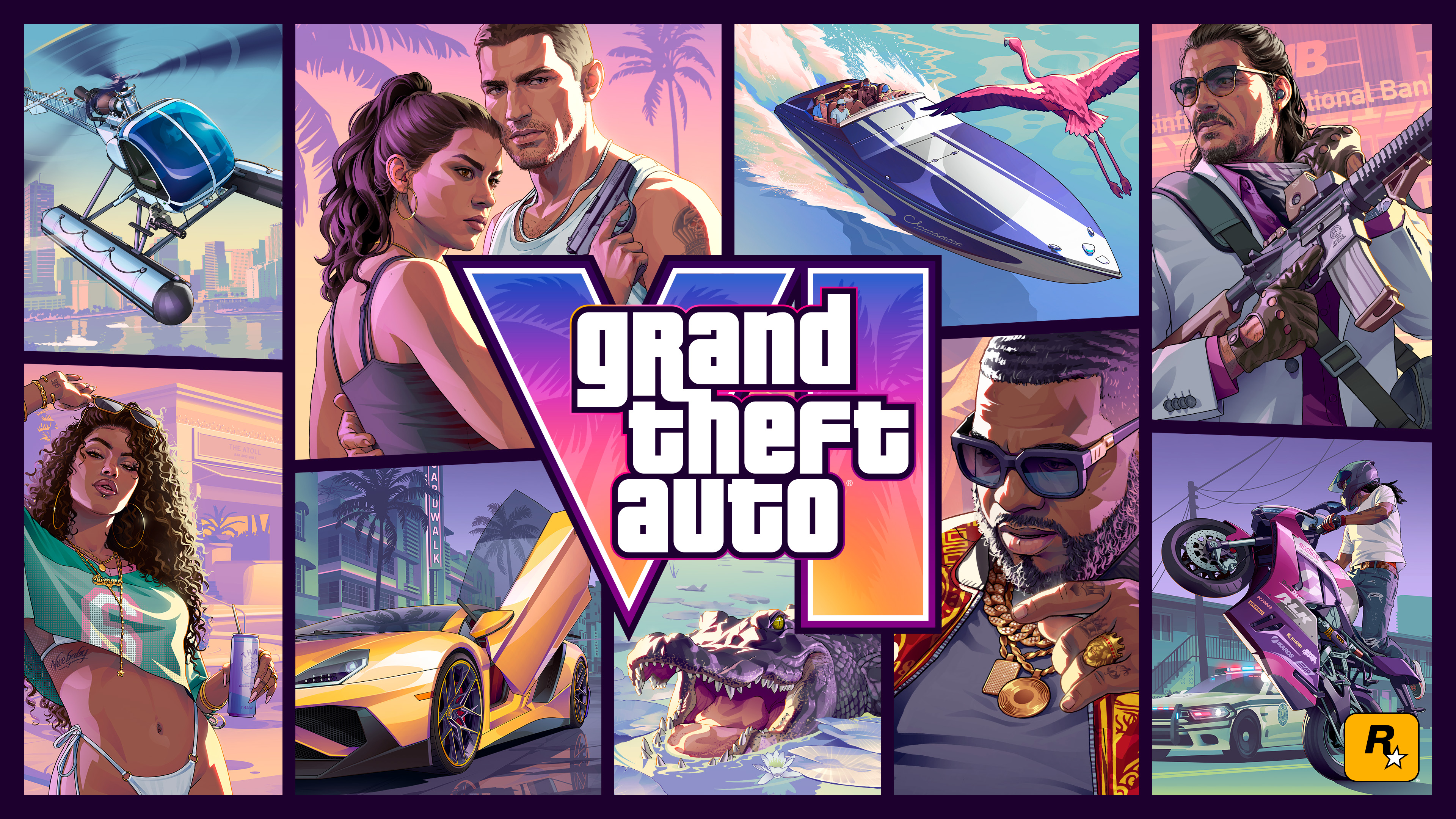
It's been 13 years since Grand Theft Auto V came out. Today, its sequel finally arrives. And a significant chunk of the working world is treating it like a public holiday.
Last week, Logitech announced Logi Game Day: a paid day off for all 7,000 of its employees to play a game of their choice, timed to the launch. Logitech's own survey found 18% of salaried workers plan to take the day off regardless, and economists have priced launch week at roughly $1 billion in lost US productivity.
It's a cultural event. And because I work at a brand studio, I've been asked to explain how GTA's branding got it here. Sorry to the industry and my ECD, but I don't think it did.
I've never played GTA. I know everything about it.
I’ve never owned a copy of GTA. My entire direct relationship with the franchise comes from watching my stepbrother play. I’d sit there as he stole any car he wanted, ran down pedestrians, and somehow shook an entire police force by driving until they gave up. Then there was the radio. Every car came with its own stations, and a generation discovered music by flipping through them mid-heist. People still talk fondly about songs they first heard in a stolen sedan.
That was years ago, and the GTA knowledge never left. The traditional brand ingredients, like the logo, stuck with me too. But what made GTA more than a well-made brand were the moments: mechanics that leaked out of the game and became folklore, permeating popular culture on a global scale.
There’s many ways we test a brand's efficacy and this is one of them: not just whether its users love it, but whether people who've never touched it can describe it. I can.
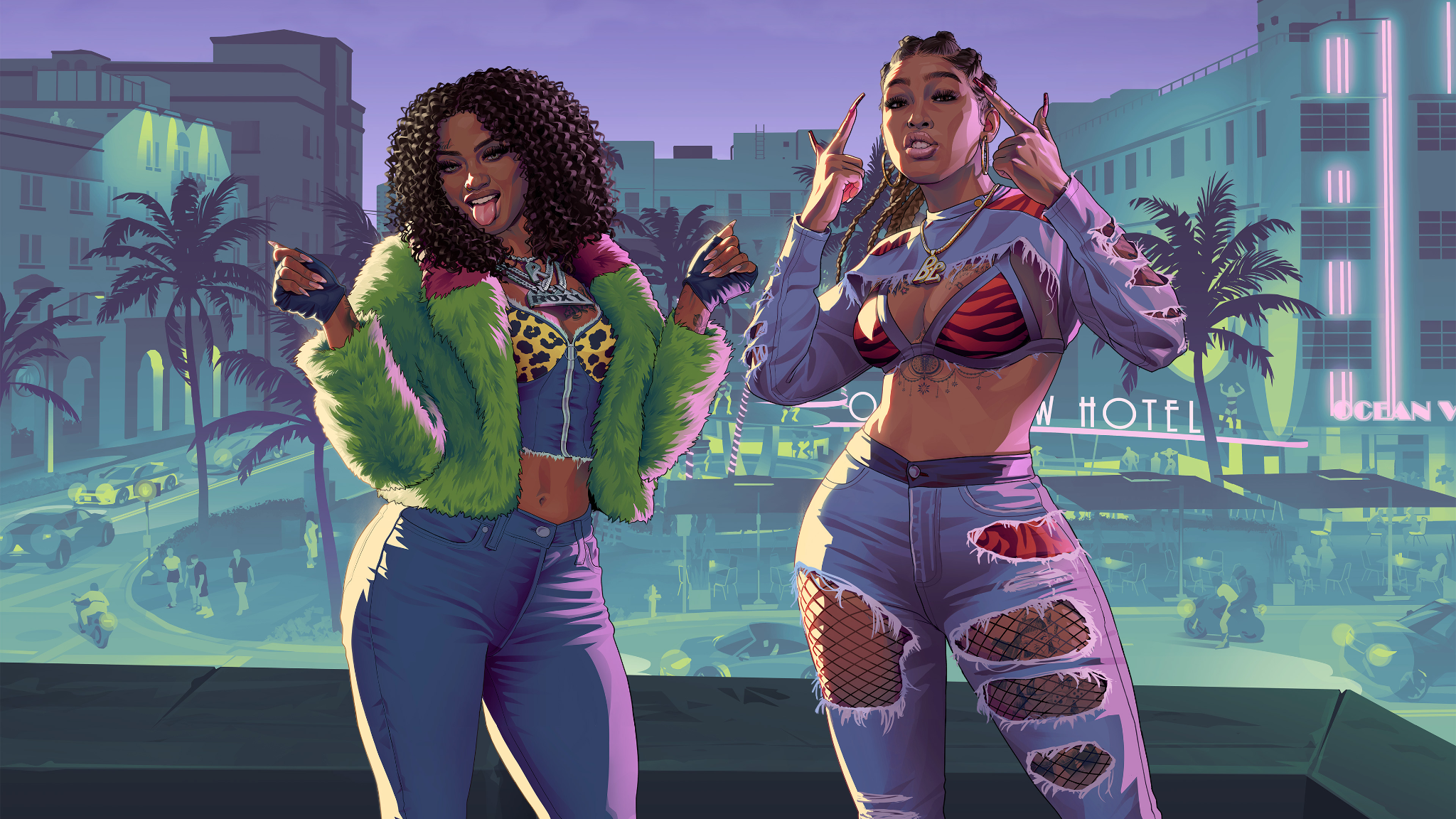
The game made the brand. Not the other way round.
None of this means the brand doesn’t matter. Here, the brand’s job wasn’t to invent something; it was to express it. The game itself is the revolutionary part. The brand’s achievement is that every piece of it feels like it came from the same place.
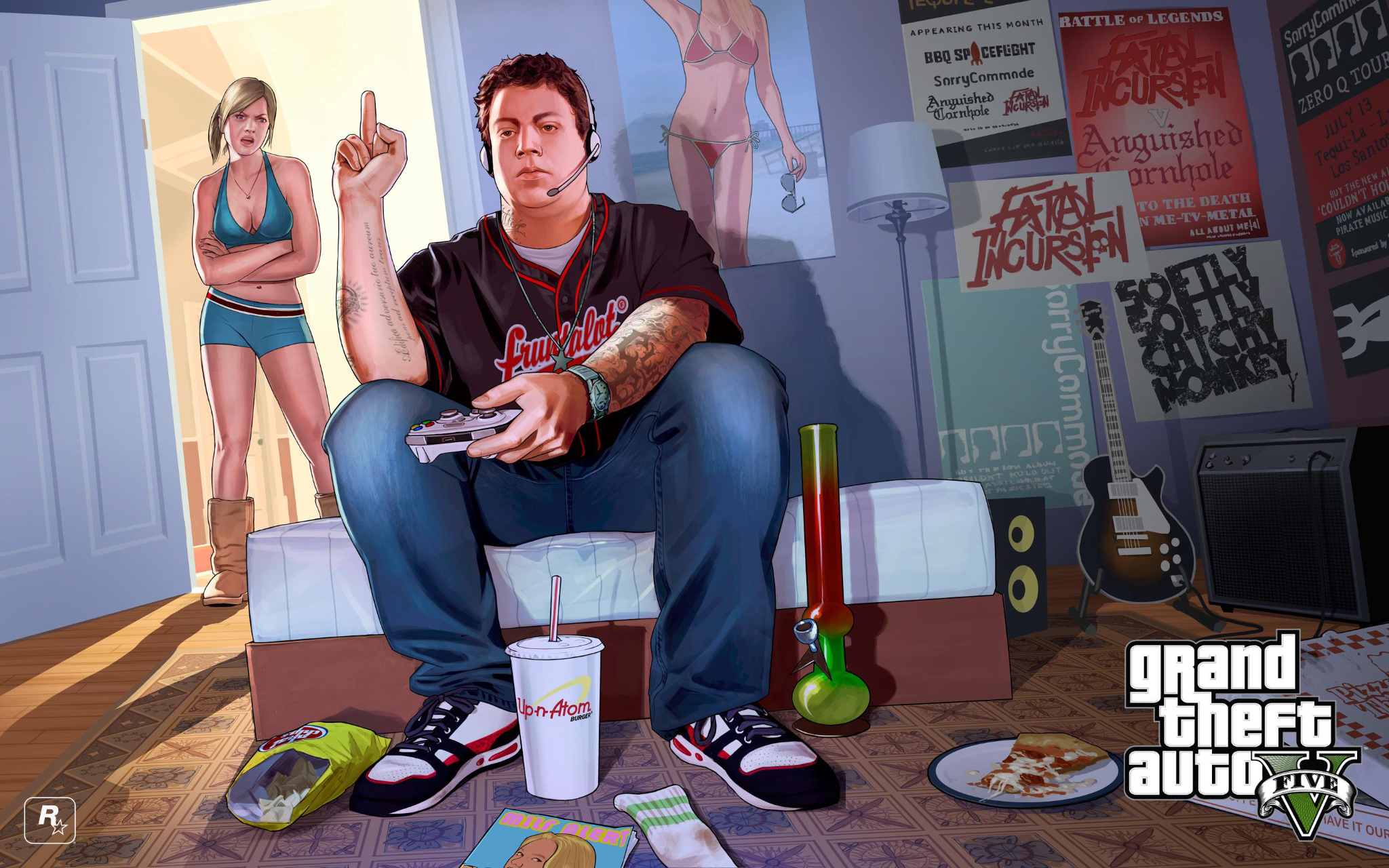
You can see that in a single piece of GTA V promotional art: Jimmy De Santa sits on his bed in a gaming headset, controller in hand, eyes locked on the screen. His sister Tracey stands behind him, furious. He gives her the finger without turning his head. Everything else in the frame carries the same energy: the careless camera angle, as if someone snapped it on the way past, the band posters, the bong, the cold pizza on the floor. It’s crude, funny and has circulated online for years. More importantly, it’s perfectly on-brief: it tells you exactly who the game is for and what it thinks about being told off. While many brands sell aspiration, GTA is instead painting a portrait of the attitude you'll find inside.
That fit is exactly what Saints Row lost. For years it was GTA’s rival, built on outdoing it. Its 2022 reboot arrived with a fresh look and tone, and fans said from the first reveal that it had lost the series' feel. It reportedly sold around 1.7 million copies, likely the lowest in the franchise's history, and its studio, Volition, was shut down in 2023. A rival CEO later summed it up: the team "didn't know what they were building." A new look had nothing true to express.
A Permission Slip
GTA has always held a mirror up to America: its excess, its cops, its talk radio, its consumerism. That hasn't changed. What has changed is everything around it.
We live in a more careful culture than we did in 2013. We scrutinize class, language and power far more than we used to, and for good reasons. That care has a side effect: almost nowhere feels consequence-free anymore. GTA is one of the last places that does. It's satire where you're invited to step inside, where the rules are suspended, nobody actually gets hurt.
That isn't a brand strategy. It's a point of view, held for nearly 30 years without being sanded down by focus groups. Very few brands have the nerve to keep one that long.
But Not Yet
Rockstar always planned a long wait. It spent most of those 13 years making Red Dead Redemption 2 and keeping GTA V alive across three console generations. What it didn’t plan was missing its own deadline: GTA 6 slipped from fall 2025 to May 2026, then again to November. In most industries, delays like that are a crisis, but they haven’t seemed to dent demand.
We're surrounded by content made faster and cheaper than ever, much of it slop. Against that, a studio that keeps saying "but not yet" reads as a statement of values: it would rather get it right than get it out.
Holding attention for 13 years without a new game is remarkable, and it happened on two fronts. First, Rockstar never really left. GTA Online turned a 2013 game into a place millions of people kept coming back to. Second, when Rockstar went silent and heads-down on the work, the internet filled the silence. The wait itself became a meme: people graduated, got married and had kids, all before GTA 6 came out. People did not hesitate to express this and each time was marketing Rockstar never paid for.
One kept people playing. The other kept people waiting. The audience didn’t just sit through the wait, they wrote a good chunk of the hype.
Brand is the amplifier, not the source. No identity system will make people wait 13 years. But if what you make is that damn good, the best thing your brand can do is stay consistent, keep its point of view, and get out of the way.
I’ll say this as someone whose job is branding: a rebrand won’t fix a product problem. What it can do is take something great and make sure the right people see it, feel it and remember it. We can make something great louder. We can’t make it great to start with.
There is one risk. 13 years of memes have set a bar no game may be able to clear, and we'll find out today whether the wait was worth it. I'm not taking the day off. But if you heard me complaining about a sore throat yesterday afternoon, mind your business.