The uncomfortable path to meaning
As AI-driven products become more present in everyday interactions, brands face a new challenge: moving beyond technical sophistication to create clarity, trust, and meaning.
That was the task facing Further, a global design agency, when they were commissioned by Parloa, a company shaping how enterprises use conversational AI at scale. We spoke with Filipe Peregrino, Design Director at Further, about translating complex technology into a human brand system, and what it means to design for AI today.
Could you briefly introduce yourself and Further in a few words?
"I’m Filipe, a Design Director at Further New York, previously DesignStudio. The agency originally started in London and expanded globally. Further is the result of one of our expansion moves into broader areas of video production and activations through the acquisition of two additional companies. At that moment, when we significantly amplified our offering. We also rebranded ourselves as Further."
How would you describe the Parloa project, and what made it an interesting challenge for Further?
"What was immediately exciting about Parloa was their energy and vision. From the first conversations, we felt inspired by their ambition.
Parloa has been an AI-driven company from the very beginning. While its predecessor, Future of Voice (also founded by Malte & Stefan), operated as an agency, Parloa itself was built with AI at its core. That foundation remains central today, even as the technology and its applications continue to evolve. Our task, therefore, was not to reposition a company newly entering AI, but to shape a brand for a company deeply rooted in it. One that can grow beyond any single technological wave.
Beyond that, the core challenge was building something lasting within an industry that’s constantly changing. AI has already evolved tremendously and continues to do so. The narratives around it shift all the time. We saw this as a creative challenge: how do you tell a story that doesn’t depend solely on the technology itself?"
Throughout the case study, you speak about moving from technology to meaning. How did that principle guide your decisions?
"It relates closely to the previous point. We knew we could write copy about features, functionality, and technology, but so could everyone else in the industry. Eventually, competitors would say similar things.
So we searched for what would truly last. We went back to a human truth: what do people actually want from this technology?
From the beginning, we saw that the team at Parloa was visionary and deeply committed. Their excitement wasn’t just about AI, it was about building meaningful relationships. That insight led us to articulate their North Star: helping businesses build meaningful relationships. That’s something that can guide them for years, regardless of how technology evolves."
Parloa is a very tech-focused company. Was there tension in shifting toward a more human brand?
"The challenge wasn’t about moving away from the tech-world, but rather about expanding how it’s expressed. A key question for us was tonality: how do we communicate warmth and humanity without sounding forced or inauthentic?
The other challenge was practical. Parloa is a B2B SaaS company. They must clearly communicate tangible benefits and technical capabilities. So we worked closely with them to structure the narrative hierarchy: where does the human story live, and where do we articulate functionality?
We eventually examined their platform itself. We asked how the brand could influence even the product experience. How we could introduce warmth and meaning into the most functional interactions. That process was long but essential."
How did the concept of layered lenses emerge, and what does it express about Parloa?
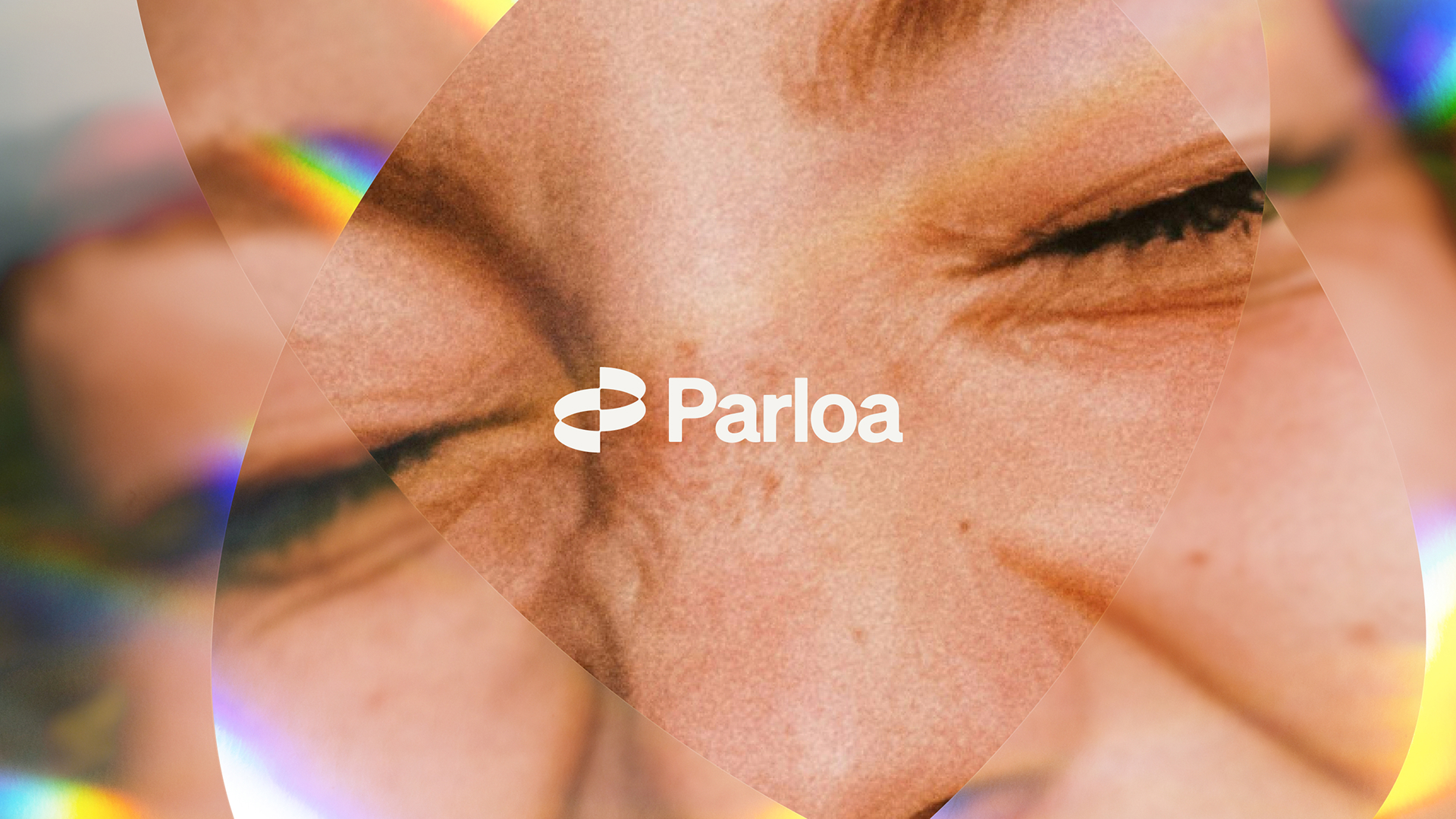
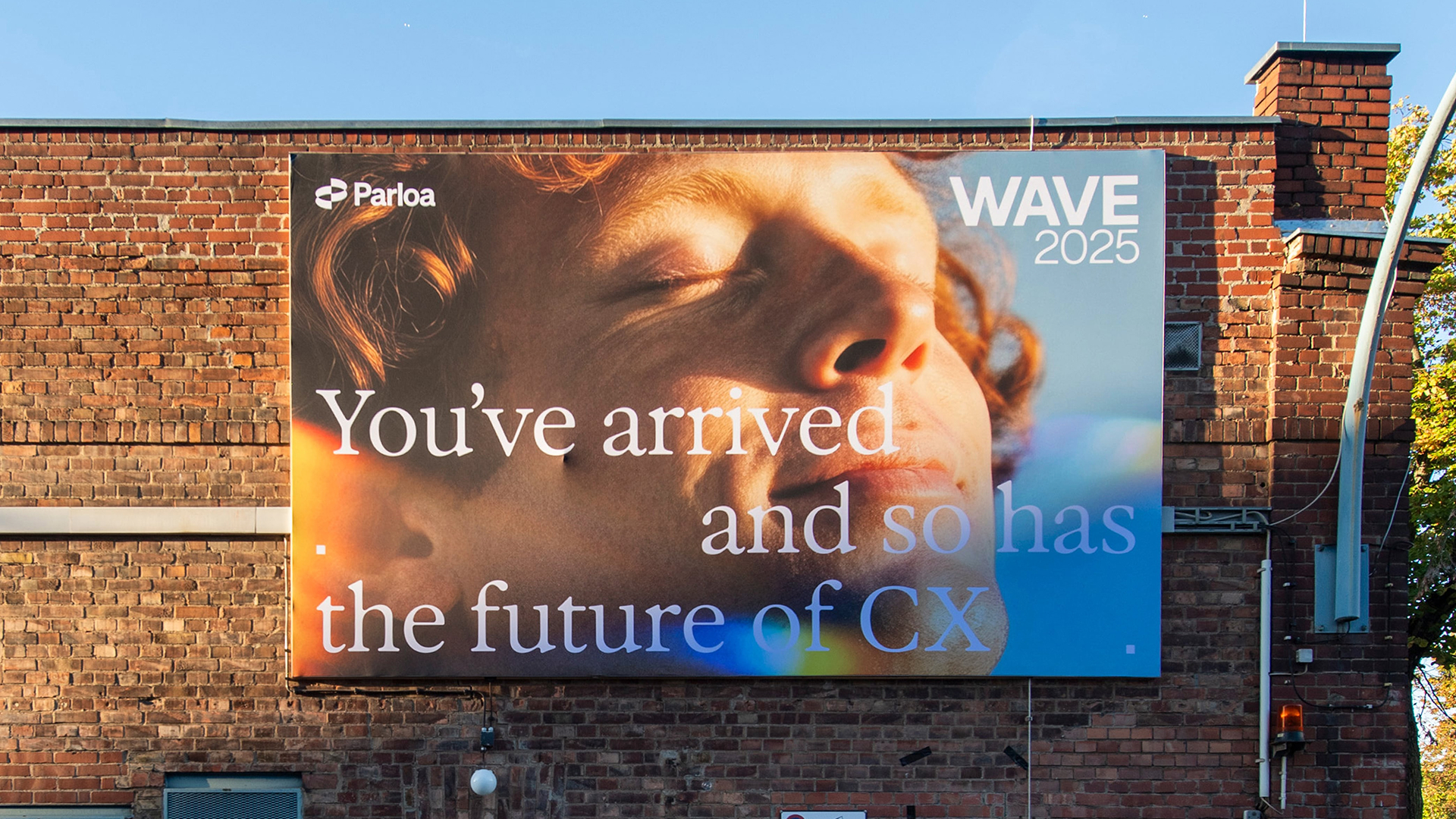
"The layered lens is central to the visual identity. It’s almost poetic. We focused on the idea of depth. Meaningful relationships deepen over time. They are layered experiences. The lens became our way of visualizing that richness, the way you see someone you know well: vibrant, layered, emotionally enhanced.
We use different types of content through the lens, sometimes abstract, sometimes more literal, but the goal is always to amplify emotional impact. It directly ties back to building meaningful relationships."
How did you translate that concept into typography and copywriting?
"Typeface selection balances both rational and conceptual considerations. Rationally, we asked: Does it strike the right tone? Does it balance sophistication and warmth? Is it distinctive? Can they own it?
Conceptually, depth became important again. The typeface we selected, Exposure by 205TF, has a unique ability to blur and unblur. It mirrors how content is revealed through the lens device. We played with depth of field in typography, allowing transitions that echo the layered concept. It’s a beautiful and flexible typeface, and it fit the story perfectly."
You also significantly changed the logo. How did that decision come about?
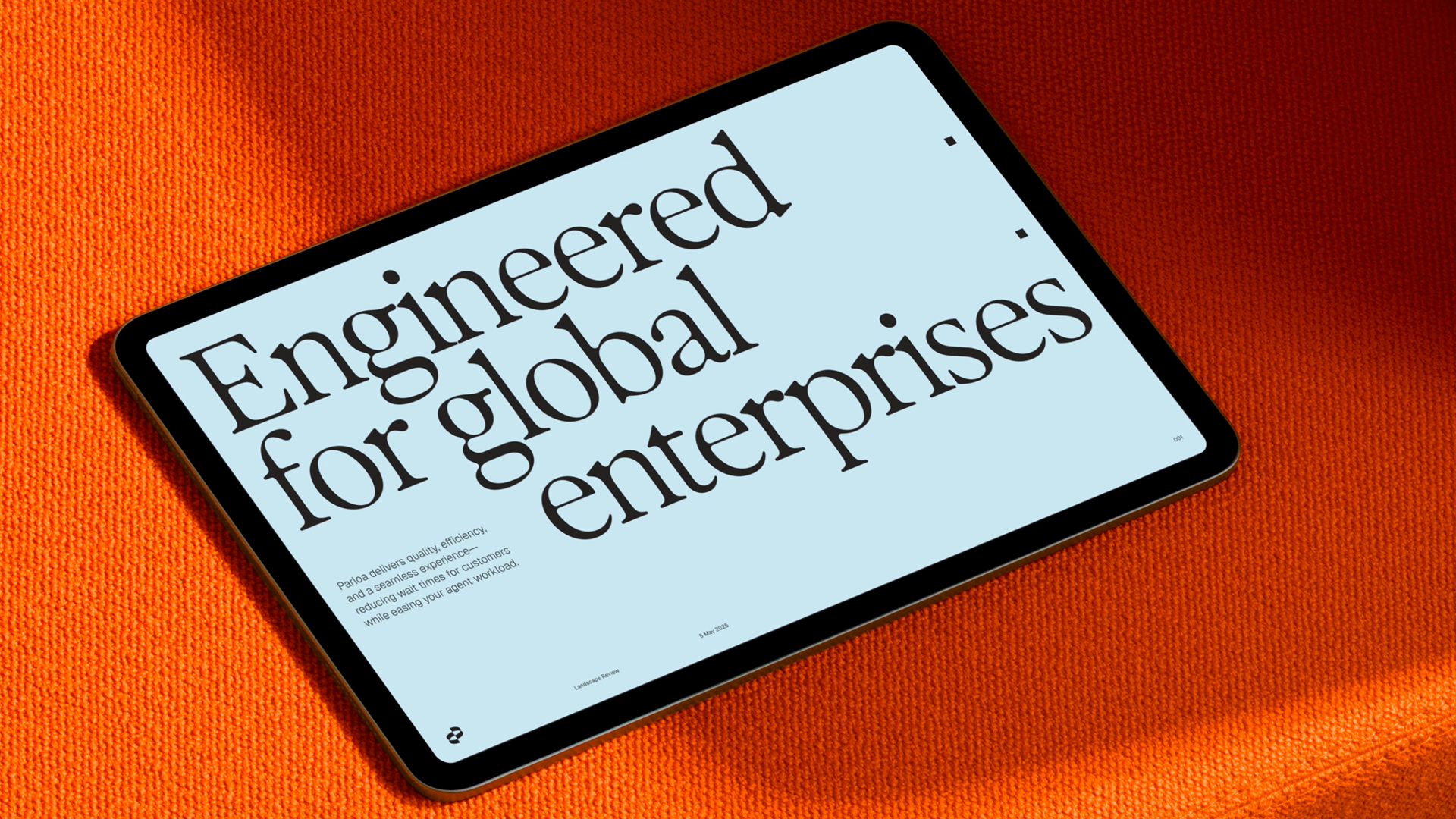
"There were countless explorations. The final logo kept resurfacing during the process. It’s clearly connected to the lens device, built from intersecting ellipses. Interestingly, it also subtly resembles a “P,” referencing Parloa’s initial and their previous P-shaped speech bubble logo.
It was a combination of serendipity and meticulous iteration. Sometimes you discover something that feels special, let it sit, and it grows on you. That’s what happened here, for both us and the client."
How do physical brand touchpoints like merch contribute to brand culture in tech-driven companies?
"The strongest brands stand for something beyond themselves. They have a unique belief or perspective that resonates with audiences, building community.
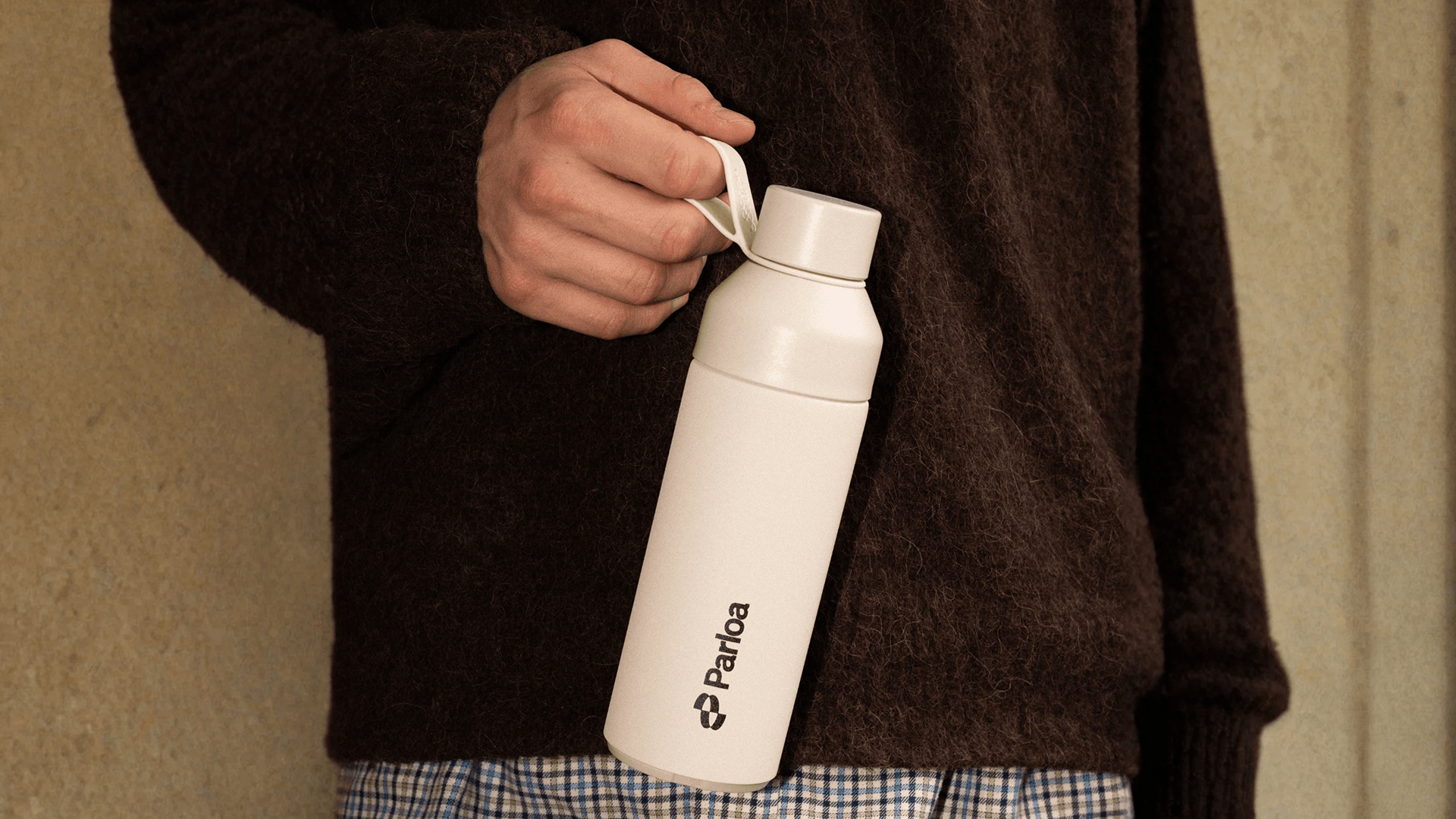
Merch allows people to express alignment with those ideas nonverbally. It’s not about free promotion—it’s about belonging and joining something bigger. When brands use merch to let people participate in shared beliefs, it becomes a powerful way to spread that culture."
Do you have examples of merch used effectively?
"Oh, so many. Most of the hats you see me wearing are merch. The best examples are often personal.
For me, it’s something simple, like a favorite local burger spot in New York, 7th Street Burger. I love it so much that I got a shirt as a gift. It wasn’t promotion, it was genuine love for something I believe in.
On a larger scale, brands like A24 have merch that lets people express alignment with their commitment to good cinema and authentic storytelling. It’s about showing what stories you care about.
Sometimes merch also signals how a company navigates change. For example, Parloa emphasizes building meaningful relationships in a fast-changing AI landscape, and merch can let people wear not just the logo, but the belief behind it."


What is one key takeaway from the Parloa project that other branding agencies could apply?
"Don’t avoid difficult conversations. AI is complex, raising questions about ethics, responsibility, and positioning. Staying in safe territory yields generic results.
Meaningful work comes from challenging assumptions and sitting with discomfort. At multiple stages, we deliberately provoked the brand, pushed it too far, tested boundaries. But that tension was necessary. By stretching the idea, we were able to understand where the edges were, where the sandbox ended, and ultimately where the sweet spot lived.
For me, the biggest learning from this project is that the uncomfortable moments are not obstacles. They’re the pathway to something special. If you avoid them, you risk ending up with something generic. If you lean into them, you have a chance to create something meaningful."
As AI continues shaping brand interaction, what excites or challenges you most?
"It's something we think about constantly. One thing that feels certain is that AI will lead to an enormous volume of content that is increasingly high in quality and accessible. When that happens, differentiation no longer comes from production value alone. It comes from perspective.
The real difference will be our unique point of view, how we interpret a brief, what risks we're willing to take. At the end of the day, we are humans building for humans. Our lived experiences, instincts, and judgment are what allow us to create work that resonates on a deeper level. With that mindset, AI becomes a powerful tool for execution: it's not there to replace our teams or remove the storyteller from the equation. Our people remain the crafters of the narrative, shaping the vision.
AI can help us explore ideas faster, fill operational gaps, and enhance our ability to realize that vision. It supports the creative process rather than defining it. When you approach AI with the mindset that "I am the storyteller," you reaffirm the value of human creativity. The tool becomes an instrument of empowerment, not replacement." Before we close, is there anything you’d like to add?
If I had to summarize: There is a lot to be excited about in the AI landscape if we use it responsibly. And merch, when used as a vessel for shared ideas and storytelling, is incredibly powerful.”
Article originally published in Merchery.
.png)
.png)